Bridging Funding Channels with Reward Mechanics and Moderation Features in Digital Reel and Table Formats
Mia Griffin · Aug 26, 2026
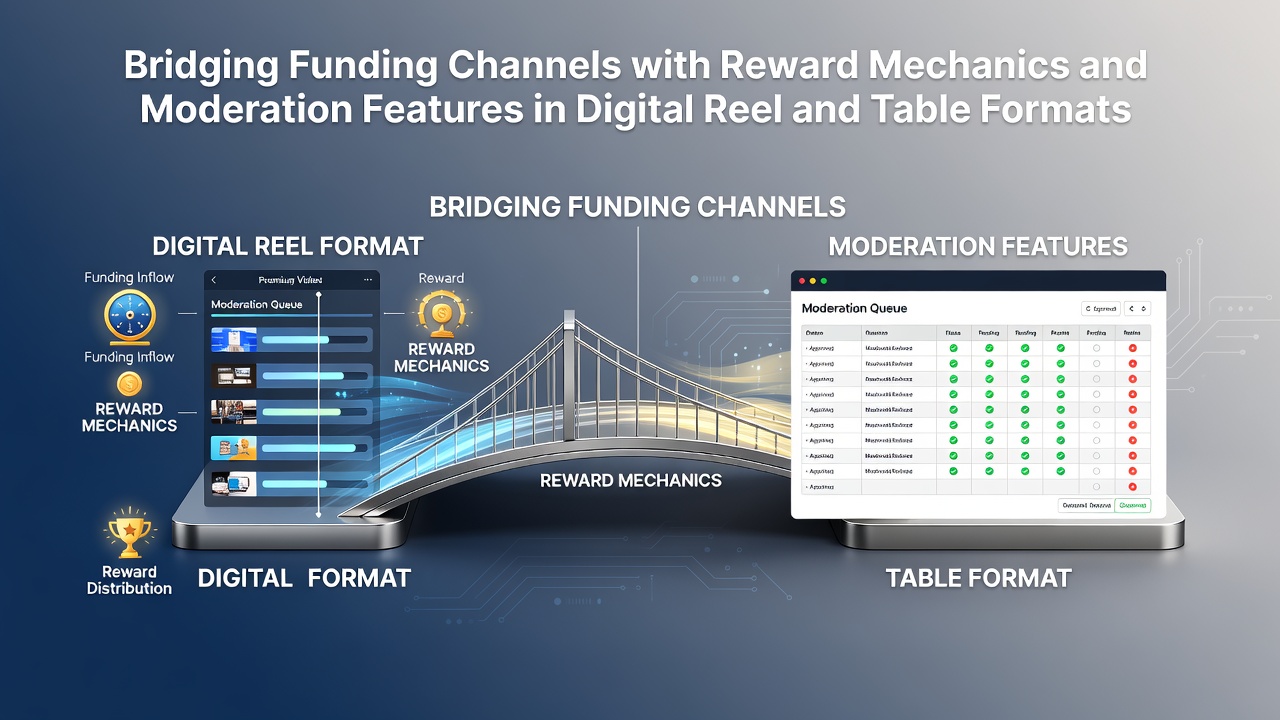
Bridging Funding Channels with Reward Mechanics and Moderation Features in Digital Reel and Table Formats
Digital reel formats and table game platforms now connect payment processing systems directly to reward programs and player protection tools, creating unified environments where deposits trigger bonuses while built-in limits monitor activity in real time. Operators achieve this integration through APIs that link banking gateways to loyalty engines and responsible gaming modules, allowing seamless movement between funding, engagement, and oversight functions.
Payment Integration Across Reel and Table Experiences
Funding channels in online slots and table games rely on secure transaction layers that support multiple methods, including bank transfers, e-wallets, and instant card options, all routed through centralized processors. Data from industry reports indicates that platforms handling both reel spins and table rounds process deposits within seconds when these channels connect to backend reward systems, reducing friction for users who move between game types. In August 2026, several major studios plan expanded support for regional payment schemes that automatically sync with bonus eligibility checks.
Table game environments, such as digital blackjack and roulette, require similar transaction speed because players often adjust bets rapidly, whereas reel formats emphasize sustained session funding. Observers note that unified payment rails help maintain consistent moderation flags across both categories, since transaction volume data feeds into the same risk algorithms regardless of game format.
Reward Mechanics Tied to Deposits and Play
Reward structures activate upon successful funding events, granting points, free spins, or cashback percentages that scale with deposit size and game selection. Reel-based titles frequently award incremental loyalty multipliers after each funded spin sequence, while table formats distribute rewards based on hand volume or round completion rates. Research indicates that these mechanics increase retention when the reward engine pulls directly from payment confirmation records rather than operating as a separate module.
One documented approach involves tiered loyalty programs where cumulative funding across both reel and table sessions unlocks higher reward rates, with moderation parameters automatically adjusting bonus release schedules if spending thresholds trigger. Such systems ensure rewards remain accessible yet bounded by the same controls that govern deposits.
Moderation Tools Embedded in Funding and Rewards
Moderation features now sit inside the same infrastructure that handles payments and rewards, enabling real-time deposit caps, session timers, and self-exclusion flags to interact with bonus calculations. When a player sets a daily funding limit, the reward engine withholds promotional credits once that ceiling is reached, preventing escalation. Studies from regulatory bodies in multiple jurisdictions show that integrated systems reduce instances of unchecked play compared with isolated tools.
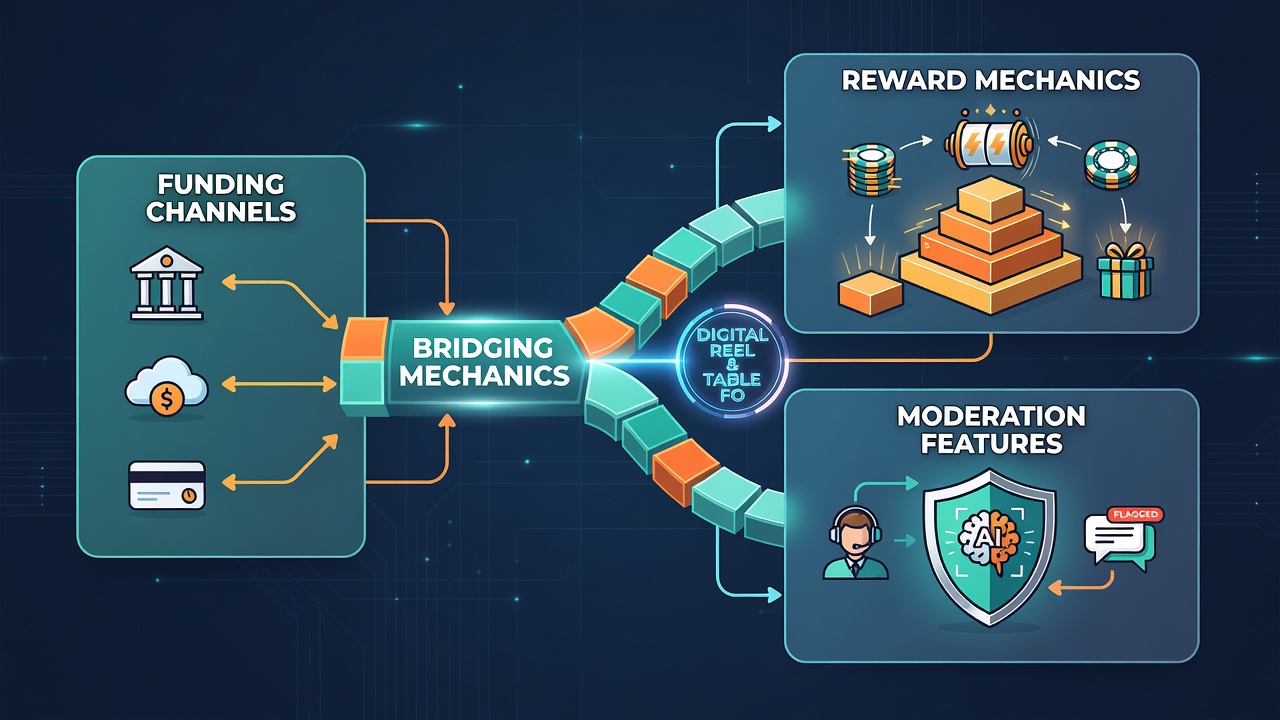
Table game interfaces often display these controls alongside bet histories, while reel platforms surface them during loading screens between rounds. Both formats benefit from shared databases that track funding patterns and reward redemptions, allowing operators to apply consistent policies. Figures from Canadian provincial regulators reveal that platforms adopting unified moderation see measurable drops in player complaints related to bonus misuse.
Technical Architecture Supporting the Bridge
Backend architectures employ event-driven pipelines where a deposit event simultaneously updates the player ledger, activates reward rules, and evaluates moderation criteria before gameplay resumes. Reel and table servers query the same core services for eligibility, ensuring that a bonus earned on slots remains valid when the player switches to a table game within the same account session. This architecture avoids duplicate data stores and minimizes latency during format transitions.
Developers implement encryption standards across all three components, with audit logs capturing every funding, reward, and limit adjustment. Industry associations report that such logging supports compliance audits without requiring separate data exports for each module.
Regional Developments and Standards
Regulators in Australia and the United States have issued guidelines encouraging operators to demonstrate interoperability between payment systems, reward engines, and protection tools. A National Council on Problem Gambling report outlines how integrated platforms can flag at-risk patterns earlier by correlating deposit frequency with reward accumulation rates. Meanwhile, European operators reference frameworks from the Belgian Gaming Commission that emphasize unified reporting across game formats.
Platforms serving international audiences adapt these standards by configuring region-specific rulesets that still operate through a single technical bridge, preserving consistent player experiences while meeting local requirements.
Conclusion
The convergence of funding channels, reward mechanics, and moderation features continues to shape digital reel and table formats through shared technical layers and synchronized data flows. As platforms prepare for updates scheduled around August 2026, the emphasis remains on architectures that treat payments, engagement incentives, and player safeguards as interconnected rather than isolated elements. This approach supports operational efficiency while aligning with evolving regulatory expectations across jurisdictions.